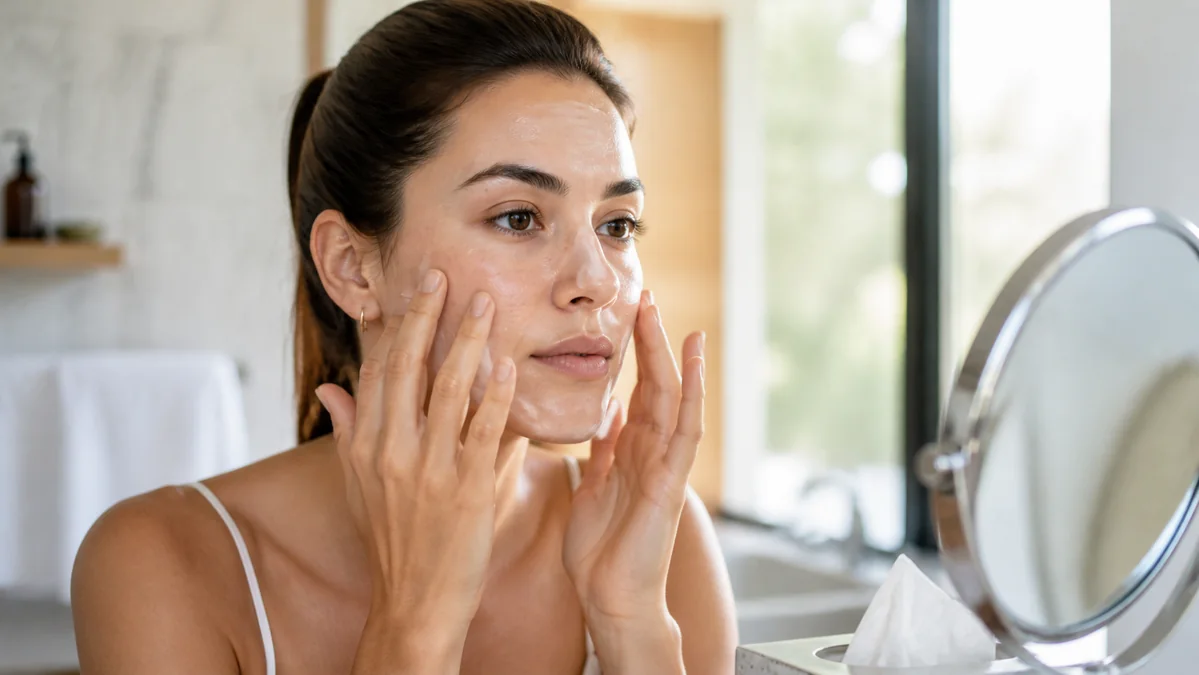
Sunscreen can sting when wet product reaches the eye through direct application, sweat, rubbing, or migration from the forehead. It can also irritate the skin around the eyes even when none enters the eye. Those are different problems and require different responses.
If sunscreen is in your eye: stop applying products and rinse with clean water. FDA sunscreen labeling directs users to keep the product out of eyes and rinse with water to remove it.
Seek prompt medical care for severe pain, vision changes, significant swelling, light sensitivity, injury, or symptoms that do not improve after rinsing.
Decide whether the eye or skin is reacting
Eye exposure often causes sudden tearing, blinking, and burning inside the eye. Skin irritation appears on the eyelid or surrounding skin as persistent redness, itching, burning, or a rash.
Wash your hands before touching the area. Remove contact lenses if they come out easily during rinsing, and do not rub. Suspend eye-area cosmetics until symptoms settle. A recurring skin reaction deserves professional assessment rather than repeated product trials.
Choose a product you can control
Read the Drug Facts and directions. For use around the eyes, the American Academy of Dermatology suggests a sunscreen stick to help prevent dripping; it should provide broad-spectrum protection, SPF 30 or higher, and water resistance.
If sunscreen stings or burns on application, AAD guidance suggests considering formulas containing only zinc oxide and titanium dioxide and avoiding fragrance. That is a practical starting point, not a guarantee that every mineral formula will suit every person.
Sprays should not be sprayed directly onto the face. Follow the label, apply to hands first if directed, and keep mist away from inhalation and eyes.
Apply in small controlled sections
Use the amount and timing stated on the label for exposed skin. Around the eye socket:
- Start with clean, dry hands and skin.
- Apply the face product in sections rather than one large wet layer.
- Use a controllable stick around the orbital area if it suits you.
- Keep product out of the eye and do not pack it into the lash line.
- Wash residue from fingertips before handling contacts or rubbing eyes.
Do not create a large unprotected ring around the eyes. Add UV-protective sunglasses, a brimmed hat, and shade instead of relying on sunscreen alone.

Let the layer settle
Apply sunscreen before sun exposure according to the package directions and allow it to form an even layer before makeup, sweating, or touching the face. Avoid rubbing eyebrows and temples while the product is still mobile.
Powder may alter cosmetic finish, but it should not be treated as a proven barrier or substitute for the labeled sunscreen amount. If makeup repeatedly causes rubbing near the eye, simplify that area.
Manage sweat before it carries product
Choose a water-resistant sunscreen for swimming or sweating and follow its stated 40- or 80-minute resistance and reapplication directions. No sunscreen is waterproof.
Use a clean towel to blot sweat from the forehead and temples rather than wiping it downward. Wear a sweatband, hat, or sunglasses when appropriate. If product continually runs during exercise, test a more water-resistant or less mobile formula on a noncritical day.
Reapply without pushing old product inward
Reapplication remains necessary; eye sensitivity does not justify abandoning sun protection.
- Wash or sanitize hands as appropriate.
- Blot sweat and let skin become reasonably dry.
- Apply the labeled amount in controlled sections.
- Use the eye-area format that previously stayed in place.
- Avoid dragging a sponge or stick toward the eye.
- Reapply after swimming, sweating, or towel drying as the label directs.
If wearing makeup, a careful press can reduce disruption, but cosmetic convenience should not reduce the protection instructions on the sunscreen.
Test the cause over several days
| Day | Change | Observe |
|---|---|---|
| 1 | Same formula, careful placement | Whether direct application caused sting |
| 2 | Add sweat control and hands-off set time | Whether migration decreases |
| 3 | Test a suitable eye-area stick | Comfort and movement near the orbital area |
| 4 | Try a fragrance-free mineral-only option | Skin and eye comfort |
Patch testing on skin cannot prove that a product will be comfortable inside the eye. Every sunscreen should still be kept out of the eye.
Check hidden migration sources
Hair products, brow gels, makeup removers, and face mists can also run into the eyes. Clean sunglasses and hat bands, avoid touching the face with sunscreen-coated hands, and check whether irritation begins only after a specific makeup step.
Replace a sunscreen that has changed smell, color, texture, or packaging integrity. Protect the container from excessive heat and direct sun as instructed.
Use other sun protection too
Sunscreen is one part of protection. Seek shade, wear a wide-brimmed hat, and choose sunglasses labeled for strong UV protection. These measures reduce dependence on applying product extremely close to the eye and help cover places sunscreen can miss.
Escalate persistent symptoms
Stop the suspected product and contact a clinician if a rash persists, the eyelids swell, the skin blisters, or symptoms repeatedly return. Severe eye pain, vision change, chemical injury, or breathing difficulty requires urgent care. Bring the product or a clear photo of its label.