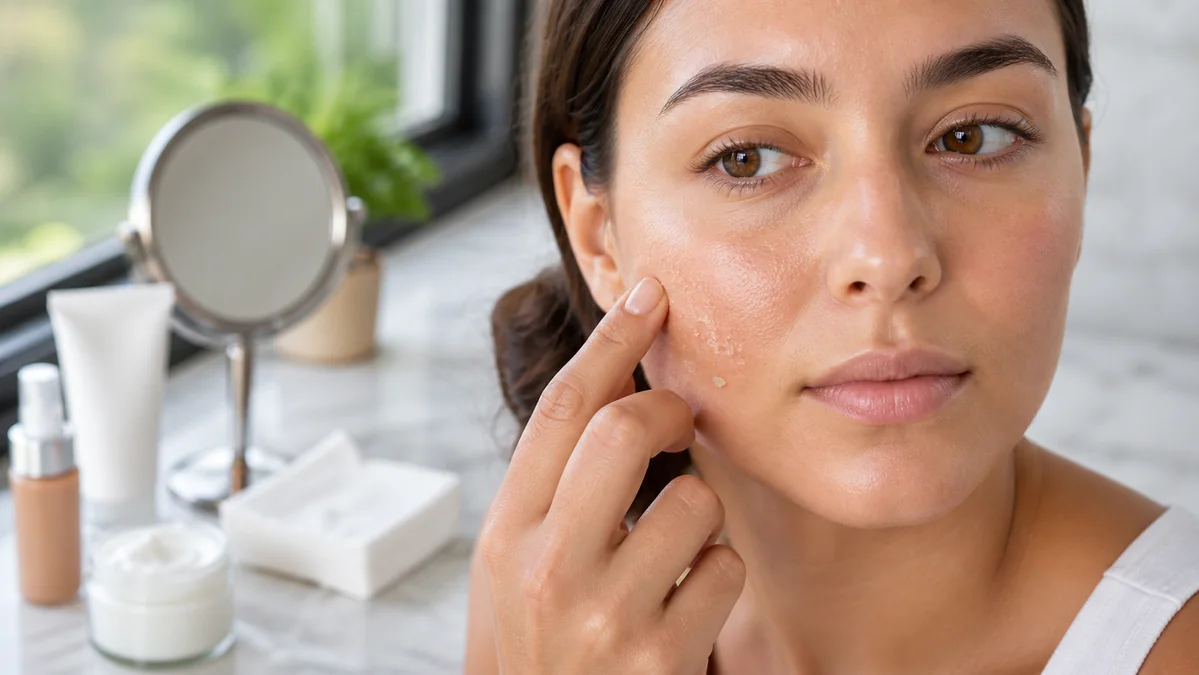
Pilling looks like tiny rolls or crumbs that form as fingers, a brush, or a sponge moves across the face. The material may be excess skincare, sunscreen, makeup, or a combination that did not form a stable layer. Dry skin flakes behave differently: they are usually visible before makeup and stay attached in patches rather than appearing only after rubbing.
Protect the sunscreen step: do not solve pilling by using less sunscreen than directed, mixing it into moisturizer, or repeatedly rubbing the finished layer.
Find the first layer that rolls
Test the routine on a quiet morning without makeup. Apply each product to separate sections or add one layer at a time. Use the normal sunscreen amount last and observe before touching the face again.
- Cleanse and apply any prescribed treatment as directed.
- Use half the usual amount of optional serum or moisturizer, not half the sunscreen.
- Let the surface settle while you dress or style hair.
- Apply sunscreen evenly and wait before pressing on makeup.
If sunscreen pills over bare, dry skin, review its directions and application method. If it works alone but fails over a serum, that serum or its amount is the practical suspect.

Use less friction and fewer layers
Several generous layers create more material for the applicator to move around. Remove duplicate hydrating products and use thin, even films of optional skincare. Spread each layer with a few deliberate strokes, then stop manipulating it.
For makeup, press or bounce rather than buffing in circles. Work in small areas and avoid returning to a section once it looks even. A damp sponge can be helpful, but it should not be dripping or used to erase the sunscreen film beneath it.
Diagnose by what you see
| What happens | Likely next test |
|---|---|
| Rolls appear before sunscreen | Remove one serum or reduce moisturizer amount |
| Sunscreen pills by itself | Change application technique; then test another sunscreen if needed |
| Texture appears only with foundation | Press on a smaller amount or try a different base texture |
| Fixed dry patches show before products | Pause irritating extras and focus on gentle cleansing and moisturizer |
| Burning or persistent redness accompanies flakes | Stop the irritating products and seek medical advice if it continues |
This table identifies the next controlled experiment, not a chemical diagnosis. Ingredient lists alone rarely predict exactly how a complete routine will behave on an individual face.
Repair pilling without restarting
When crumbs appear, stop rubbing. Use clean fingertips or a dry soft brush to lift only the loose material. Press a tiny amount of makeup over the gap if needed. Adding more serum, face mist, or cream on top can loosen a larger area.
If the damaged area includes sunscreen and meaningful sun exposure is expected, the reliable option is to remove and reapply that section according to the sunscreen directions. Makeup convenience should not take priority over an even protective layer.
Prevent the problem tomorrow
Keep a short record of product, amount, wait time, tool, and result. Change one variable per trial. “Wait longer” does not need to mean standing at the sink: apply moisturizer, get dressed, then return for sunscreen. Apply sunscreen, arrange hair, then add makeup.
Wash brushes and sponges regularly because dried product can drag fresh layers. Also check whether the same foundation pills on a clean hand or over sunscreen alone. A simple split-face test often produces more useful information than buying another primer.
When it may be skin irritation
Pilling itself is a surface behavior. Burning, swelling, itching, cracked skin, or persistent redness suggests irritation or another skin problem rather than a mere makeup mismatch. Stop new or harsh products and use a gentle routine. A dermatologist can assess symptoms that are painful, spreading, recurrent, or not improving.
The durable fix is usually subtraction: fewer optional layers, smaller amounts, less rubbing, and one controlled test at a time.
Temperature and storage can complicate the test. Follow each label's storage directions, close caps, and do not use a product that has developed an unusual odor, color, or texture. Run comparisons under similar conditions rather than judging one routine in a cool bathroom and another after a hot commute. Photograph the cheek and jaw in the same window light immediately after application and again after an hour. That record can separate instant rolling from later dryness and keeps a vague “bad makeup day” from driving an unnecessary purchase.