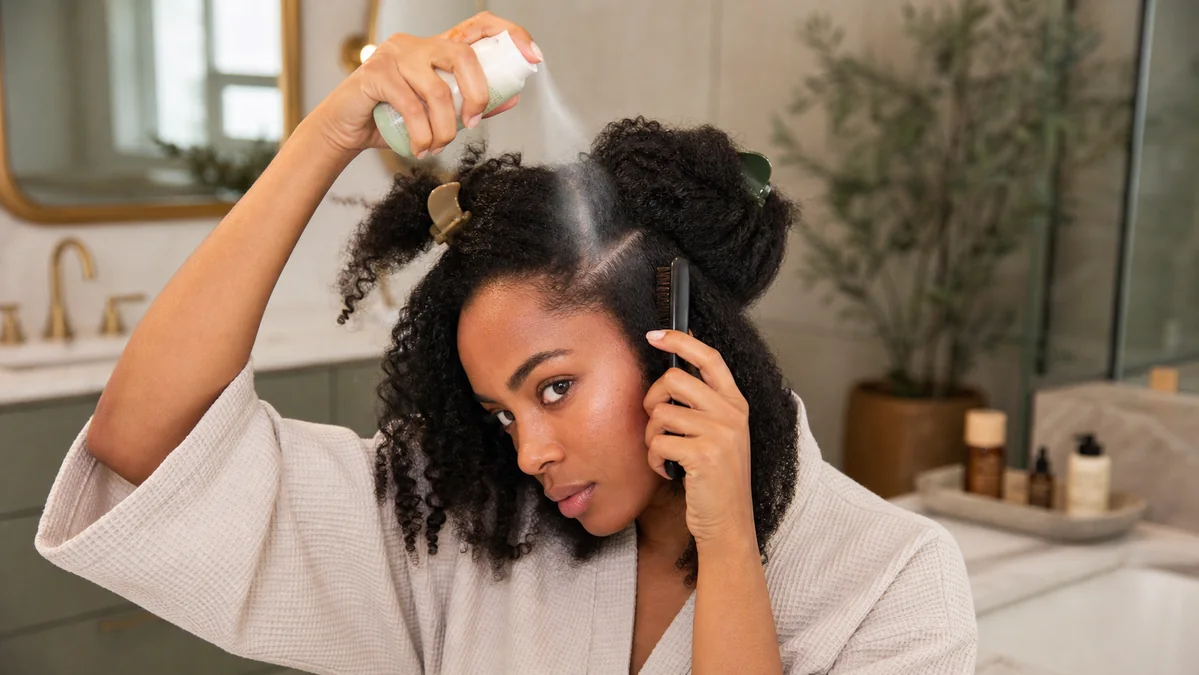
Dry shampoo can make oily roots look fresher between washes, but it does not clean the scalp. Buildup usually begins when too much lands in one place, fresh product is layered over yesterday's residue, or regular shampooing keeps getting postponed.
Working rule: start with a small amount on dry, oily roots; follow the label's wait time; distribute it; and wash with shampoo and water after one or two dry-shampoo uses.
That last interval reflects current American Academy of Dermatology guidance, not a universal hair-washing calendar. Your normal wash frequency still depends on scalp oil, hair texture, styling, and clinician advice.
Check whether dry shampoo is the right fix
Use it for visible oil at the roots, not for sweat-soaked hair, an itchy rash, odor that returns immediately, or a scalp already covered in residue. Those conditions call for cleansing or evaluation rather than another layer.
Before application, look at the part, crown, hairline, and areas near the ears. If only one zone is oily, treat only that zone.
Prepare the hair and room
Apply to completely dry hair in a ventilated space. Read the label for shaking, distance, and set-time instructions because aerosol, pump, foam, and powder products differ.
- Remove clips or accessories from the oily area.
- Brush out loose tangles without scraping the scalp.
- Divide hair into a few broad sections.
- Protect clothing if the formula has pigment.
- Keep aerosols away from flame, heat, and inhalation.
Do not improvise with cornstarch, cocoa powder, or baking soda. AAD dermatologists advise using a commercially formulated product rather than homemade mixtures that can clump or contribute to scalp problems.
Apply less than your first instinct
Hold an aerosol at the label-directed distance and use brief passes. For loose powder, tap a very small amount onto the exposed root rather than pouring it over the part. Avoid coating the mid-lengths and ends unless the product specifically instructs otherwise.
Work through the oily zones one section at a time. Stop when each target has a light, even application. You can add a little after evaluation; removing a heavy layer is harder.

Let the product absorb oil
Do not massage immediately. Leave the product undisturbed for the time printed on the label. This gives absorbent particles time to work and reduces the impulse to keep spraying because the effect is not instant.
Once the wait ends, use fingertips lightly at the roots, then comb or brush as appropriate for your hair type. For curls or protective styling, distribute without forcing a brush through a pattern that should not be brushed dry.
Inspect before adding more
Use daylight or a bright neutral mirror. Look for white cast, powder pockets, stiffness, or an area that still appears oily.
If one section remains oily, add a small targeted amount there. If the whole scalp feels coated, gritty, or dull, more product is not the answer. Schedule a normal wash.
Keep regular wash days
Dry shampoo absorbs some surface oil but does not remove oil, dead skin cells, microorganisms, and product residue the way shampoo and water do. The AAD recommends washing after one or two dry-shampoo applications.
Apply normal shampoo mainly to the scalp, rinse thoroughly, and condition according to hair needs. If one wash does not remove a heavy layer, do not attack the scalp with nails or an abrasive scrub. A second gentle lather may be preferable when the product and your hair tolerate it.
Adjust for hair type
| Hair or scalp pattern | Useful adjustment | Avoid |
|---|---|---|
| Fine, straight, oily roots | Very small targeted application | Saturating the full length |
| Dark hair with visible cast | Better distribution or suitable tinted formula | Adding oil on top to hide powder |
| Curly or coily hair | Treat exposed root zones carefully | Disruptive dry brushing |
| Dry or sensitive scalp | Use less and consider fragrance-free options | Extending wash day through discomfort |
| Styled hair after a workout | Assess sweat and odor first | Treating wet hair as ordinary oil |
Product claims do not override scalp feedback. If hair feels parched rather than refreshed, the AAD suggests considering a fragrance-free product formulated for the relevant hair type.
Clean the tools that redistribute residue
A brush packed with oil and old product can return residue to freshly washed hair. Remove trapped hair, wash the tool according to its materials, and let it dry fully. Wipe clips and combs that repeatedly touch treated roots.
Change pillowcases and wash hats or headbands when they are carrying visible product or oil. Buildup management includes the surfaces that contact the scalp.
Recognize the stop signs
Pause dry shampoo when the scalp becomes itchy, burning, tender, scaly, or persistently red, or when you notice unusual breakage or shedding. Wash the product out gently. AAD guidance recommends seeing a board-certified dermatologist if irritation remains or worsens after stopping.
Sudden patchy hair loss, sores, pus, marked pain, or signs of infection deserve prompt medical assessment rather than another cosmetic adjustment.
Use a repeatable refresh cycle
A practical cycle is:
- Start with clean, dry hair.
- Use a small targeted application on the first oily day.
- Repeat once only if the scalp remains comfortable and the label permits.
- Wash with regular shampoo and water.
- Reassess product amount if residue keeps returning.
The useful result is not the maximum number of days between washes. It is fresher-looking roots without a coated or irritated scalp.