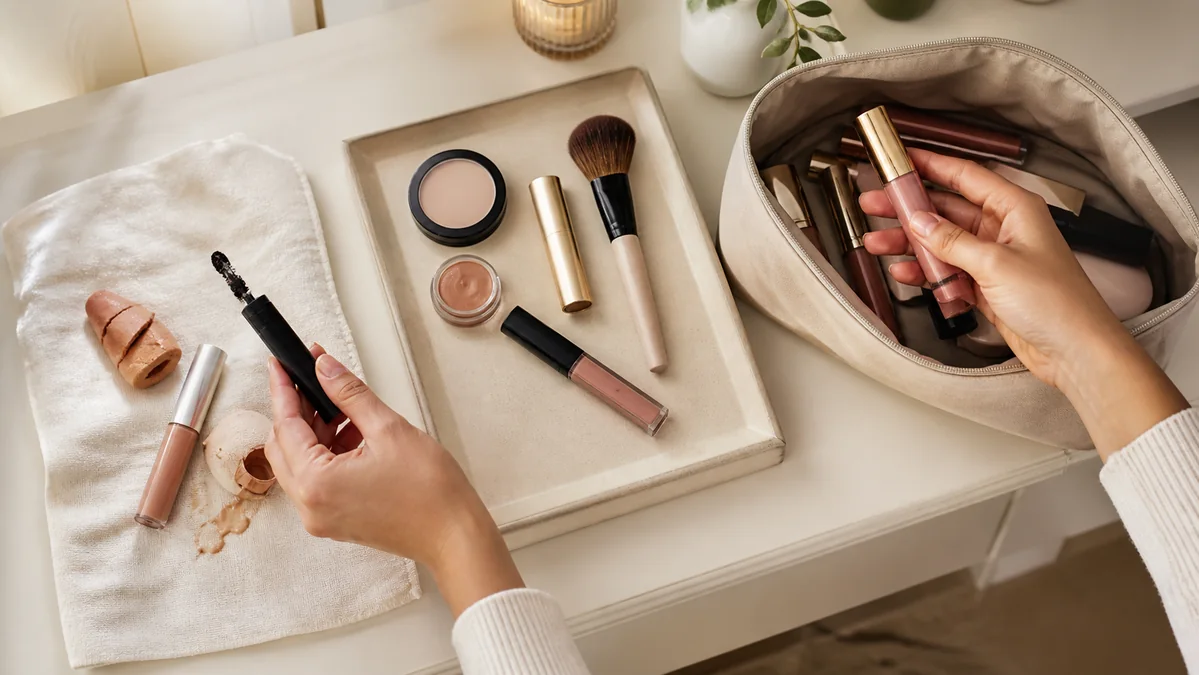
Powder dust and leaking caps turn a makeup bag into a record of every rushed touch-up. Cleaning the lining matters, but repacking an old eye product, damp sponge, and cracked compact recreates the problem. A useful audit separates hygiene, product condition, and actual use.
Quick answer: Empty everything, quarantine leaks, inspect dates and condition, clean the bag according to its care label, wipe intact packaging, discard contaminated or changed products, and repack only dry items used in a normal week.
Set up keep, clean, and toss zones
Spread a washable towel and place three trays or sections on it. Put intact products in “Keep.” Use “Clean” for sound items with dusty packaging or tools due for washing. Reserve “Toss” for leaks, broken packages, infection exposure, changed formulas, and unusable products.
Wash hands before handling the contents. Photograph ingredient labels for any product tied to a reaction before discarding it.
Minutes 0 to 5: empty and inspect
- Remove every item, including sharpeners, hair pins, and samples.
- Isolate anything wet, leaking, cracked, or uncapped.
- Check color, smell, texture, and package integrity.
- Read printed expiration dates and period-after-opening symbols where present.
- Note eye products used during any infection.
FDA says cosmetics can deteriorate before a nominal date when stored improperly, including prolonged heat or sunlight. Condition and storage history matter alongside a calendar.
Minutes 5 to 10: clean the empty bag
Follow the care label. Turn a machine-washable fabric pouch inside out and wash as directed. Hand-wash suitable fabric with mild detergent, then rinse thoroughly. With a wipeable lining, remove crumbs first and use a lightly damp soapy cloth followed by a clean damp cloth.
Do not saturate leather, electronics, cardboard structure, or glued trim. Leave every pocket fully open to air-dry. Fragrance spray does not clean a stained lining.
Minutes 10 to 15: clean what will return
Wipe closed outer packaging with a clean cloth appropriate to the material, keeping water away from powder pans and product openings. Wash brushes every 7 to 10 days and sponges after every use according to AAD guidance. Dry tools fully outside the bag.
Sharpen cosmetic pencils with a clean sharpener, then wipe the sharpener. Clean compact mirrors without dripping liquid into hinges or powder.

Toss immediately for contamination or change
Discard eye cosmetics used during an eye infection. Throw away a product with a changed smell or color, visible growth, unexplained separation that does not resolve as its label describes, broken closure, or debris inside. Do not add water or saliva to revive dry mascara.
FDA notes that some industry experts recommend replacing mascara three months after purchase because of repeated microbial exposure and eye-infection risk. Record the opened month on the tube rather than trying to remember it.
Treat sunscreen as a separate category
Sunscreen is regulated differently from ordinary makeup and carries expiration information. Discard expired sunscreen and any package whose heat exposure, separation, or damage makes use inconsistent with its label. An SPF foundation does not excuse inadequate application of a dedicated sunscreen.
Keep sunscreen out of a hot car and direct sun. A bag stored in a vehicle is not room-temperature cosmetic storage.
Decide what stays by evidence
| Finding | Decision |
|---|---|
| Used during an eye infection | Toss eye product |
| Changed odor, color, or texture | Toss |
| Cracked package or cap will not close | Toss or replace package only if maker supports it |
| Intact but never used for six months | Move out of daily bag; reassess honestly |
| Clean, stable, current, used weekly | Keep |
| Damp sponge or brush | Wash and dry outside bag before return |
Do not share makeup, brushes, or sponges. Store products capped and protected from temperature extremes, as FDA safety guidance recommends.
Minutes 15 to 20: repack a working kit
Choose the products needed for one ordinary face: lip color, one complexion correction, powder or blotting paper if useful, and a small mirror. Add eye makeup only if it is genuinely used away from home. Put brushes in a separate clean sleeve so bristles do not collect residue from caps.
Keep pencils capped and liquid products upright where possible. Move backups and occasion colors to clean home storage rather than carrying duplicates every day.
Create an opening-date habit
Write the month and year on a small label when opening mascara and other short-life products. Photograph the batch information and receipt for an expensive item if needed. Review the bag monthly and perform a full lining wash when residue appears or at least seasonally.
A printed chart cannot account for heat, shared use, contamination, or package failure. Use label directions first, then the stricter of date, condition, and exposure history.
Stop using products tied to reactions
Remove a cosmetic that causes burning, swelling, hives, eye irritation, or a repeat rash. Keep its label information and seek medical advice when symptoms persist or are severe. Report serious cosmetic problems through the FDA's reporting channels when appropriate.
The finished bag should be dry, close easily, and contain products you can identify and use safely. Empty space is evidence that the audit worked, not a cue to refill it.